.png)
Signature Programmes
Explore how the school’s signature programmes nurture critical thinking, environmental responsibility, and leadership qualities in every student.
At Angsana Primary School, we go beyond academic excellence to nurture well-rounded, future-ready learners. Through our signature LIGHT Programme, every student develops the values, skills, and confidence to lead, innovate, and make a positive difference — in their school, their community, and the world.
Our approach centres on sustainability as a vehicle for real learning. Students do not just study environmental issues; they take action on them. From leading recycling drives to designing solutions for their peers, Angsana students grow into curious, compassionate, and capable individuals — living out our school vision of A Community of Curious Minds and Serving Hearts.
Applied Learning Programme (ALP)
Our ALP uses sustainability as a rich, real-world context for developing essential 21st Century skills. In an assessment-free environment, students are free to think boldly, take risks, and grow.
Through hands-on projects and authentic experiences, students develop collaboration, critical thinking, creativity, and resilience. They also build global literacy — understanding how local actions connect to worldwide challenges like climate change and resource conservation.
.jpeg)
.jpeg)
.jpeg)
.jpeg)
Key highlights of our ALP include a school-wide recycling programme led by student Eco Stewards, in partnership with CORA Environment. From 2026, students will also interact with Smart Recycling Bins, bringing technology into everyday sustainability. Through the Eco Spotlight, Eco Stewards go beyond recycling to become advocates for the environment, preparing and delivering talks, skits, and multimedia presentations during school assemblies to inspire their peers to adopt sustainable habits. It is a platform that shows students advocacy can be both powerful and joyful. During Sustainability Week, students explore water conservation, waste management, and environmental awareness through interactive activities and carbon footprint calculations. Students also embark on a Carbon Literacy Learning Journey to the Carbon Gallery at Terra, where they explore topics such as ocean acidification, carbon sequestration, and climate change in an immersive, real-world setting.
Rebloom@Angsana
Every Primary 3 student contributes to Rebloom, a stunning upcycled art installation built entirely from recycled materials. Beyond creating the artwork, selected students are trained as docents, guiding schoolmates, teachers, and visitors through the installation and sharing its sustainability message. It is a wonderful first taste of creativity, advocacy, and leadership.
Learning for Life Programme (LLP)
At Angsana, leadership is not reserved for a few — it is a journey every child embarks on. Our LLP nurtures students as active change agents who take ownership of real initiatives and grow in confidence, empathy, and responsibility across their six years with us.
.png)
.png)
.png)
.png)
At the foundation of our LLP is the Leader in Me framework, based on the 7 Habits of Happy Kids. From Primary 1, students progressively develop self-management, teamwork, and the ability to lead and inspire others. Form Teachers weave these habits into regular lessons, and students carry these skills into authentic leadership roles as they move through the school.
.jpeg)
.jpeg)
.jpeg)
.jpeg)
Student leaders take on meaningful responsibilities such as leading school-wide campaigns, mentoring peers, and driving real change through initiatives like Project Transformer, where they identify genuine school challenges and design practical solutions. Our prefects also take the stage each term to advocate the 7 Habits to the whole school through creative talks and interactive presentations.
Leadership development at Angsana extends across five areas — Citizenship, Self-Management and Social Skills, Physical Activities and Sports, Aesthetics, and Enterprise — ensuring every child finds their strengths and grows into a confident, well-rounded individual.
The Student Leadership Challenge Workshop with Design Thinking
Selected student leaders take part in hands-on workshops that strengthen their leadership skills through the Design Thinking process. Primary 3 and 4 leaders observe everyday school spaces, speak with peers, and design ideas to improve these spaces. Primary 5 and 6 students interview teachers to understand their daily experiences and create thoughtful concepts for school appreciation activities. Working in teams, students brainstorm, prototype, and present their ideas — building critical thinking, collaboration, communication, empathy, and creativity along the way.
.jpeg)
.jpeg)
.jpeg)
.jpeg)
The LIGHT Programme at Angsana Primary School
At Angsana Primary School, we are committed to preparing our students for an ever‑changing world. To nurture future‑ready learners, we have introduced the LIGHT Programme — a refreshed approach to our Applied Learning Programme (ALP) and Learning for Life Programme (LLP).
The LIGHT programme is a distinctive, school-based initiative designed to equip students with essential 21st-century competencies and leadership skills. It serves as a launchpad for students to thrive in a dynamic environment while fostering meaningful connections, a deep sense of environmental responsibility, and a commitment to building a more sustainable future. The programme challenges students to explore real-world issues, particularly in the area of environmental sustainability, and empowers them to work together to devise innovative solutions.
What is LIGHT?
LIGHT stands for:
Leadership
Innovation
Green Initiatives
Humanity
Transformation
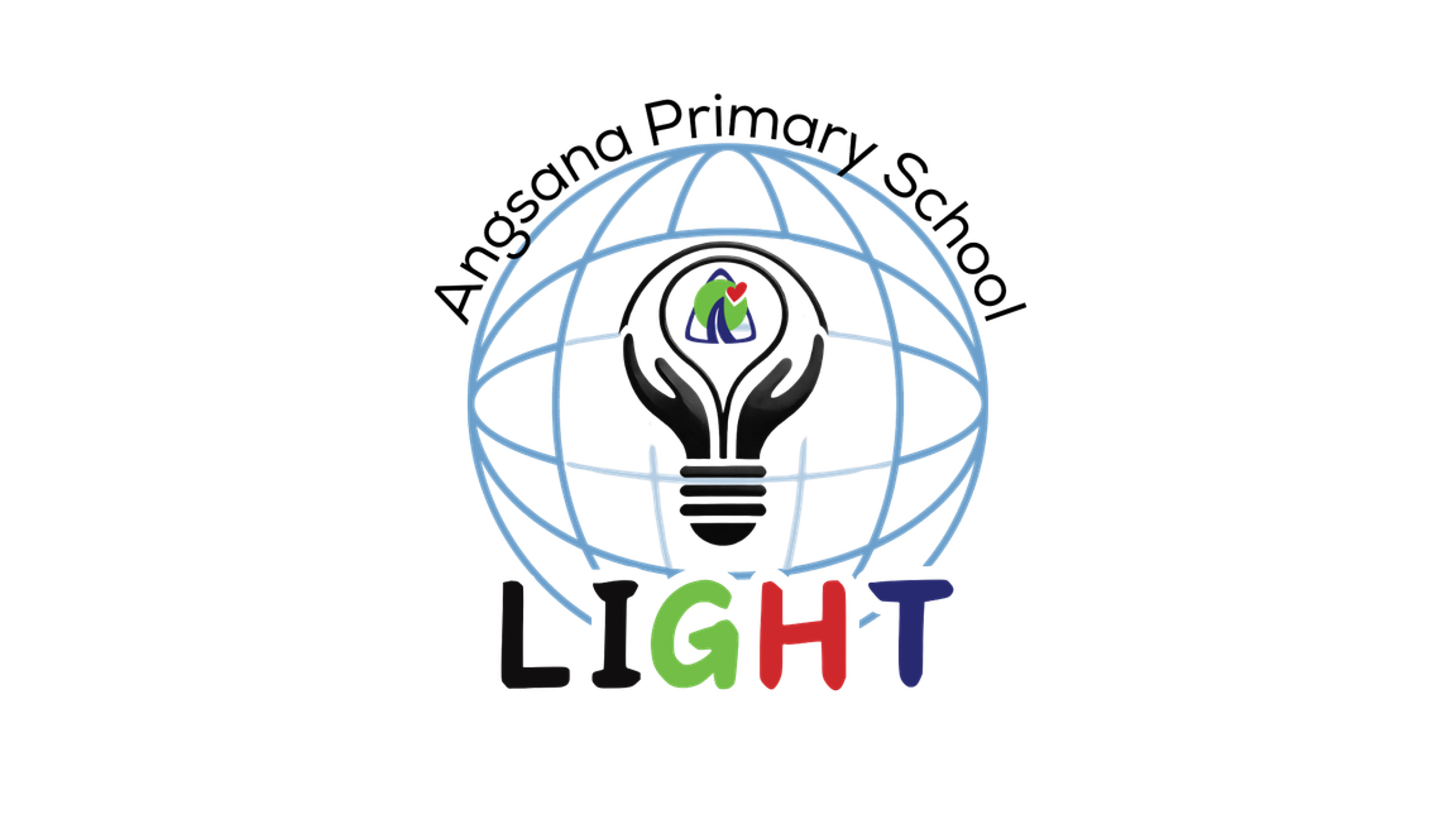
The LIGHT logo visually captures the spirit of the programme. At its centre lies the school crest, placed within a globe—symbolising the global awareness and agency of our students. This placement represents how learners apply their knowledge, work with others, and use design thinking to co-create solutions for environmental issues.
The Hands: Eco-Stewardship at the Core
Eco-stewardship is a central pillar of the LIGHT programme. Students are encouraged to understand their impact on the environment, take meaningful action to protect resources, and advocate for sustainability in their daily lives. By fostering a strong environmental conscience, the programme nurtures responsible and future-ready citizens.
The logo colours are drawn from our school crest, each with a deeper meaning:
Red – Heart to Care
Green – Committed to Learn & Eco Stewardship
Blue – Steadfast to Serve
Together, these elements reflect our commitment to nurturing students who are self-directed, confident to work together with others, compassionate, and capable of making meaningful contributions to Singapore and the world.
LIGHTing the Way Forward: Empowering Educators to Shape Future-Ready Learners
To bring this vision to life, we have prioritised the professional development of our staff. Through training in Design Thinking, our educators are equipped with a human-centred, solution-focused framework that enhances their ability to guide students through critical problem-solving processes. This training helps our teachers foster an environment where students can develop empathy, creativity, and practical solutions to meaningful challenges.
.jpeg)
.jpeg)
.jpeg)
.jpeg)
Middle Primary LIGHT Programme – Carbon Lab Reuse
Students explore life before plastics, interviewing parents and grandparents about how people once reused and repaired everyday items. They write creative stories, discover Japan's mottainai spirit of zero waste, and reflect on how small choices can shape a greener future. This programme builds empathy, curiosity, and a genuine appreciation for sustainability.
.jpg)
.jpg)
.JPG)
.jpeg)
LIGHT: Train‑the‑Trainer Workshop
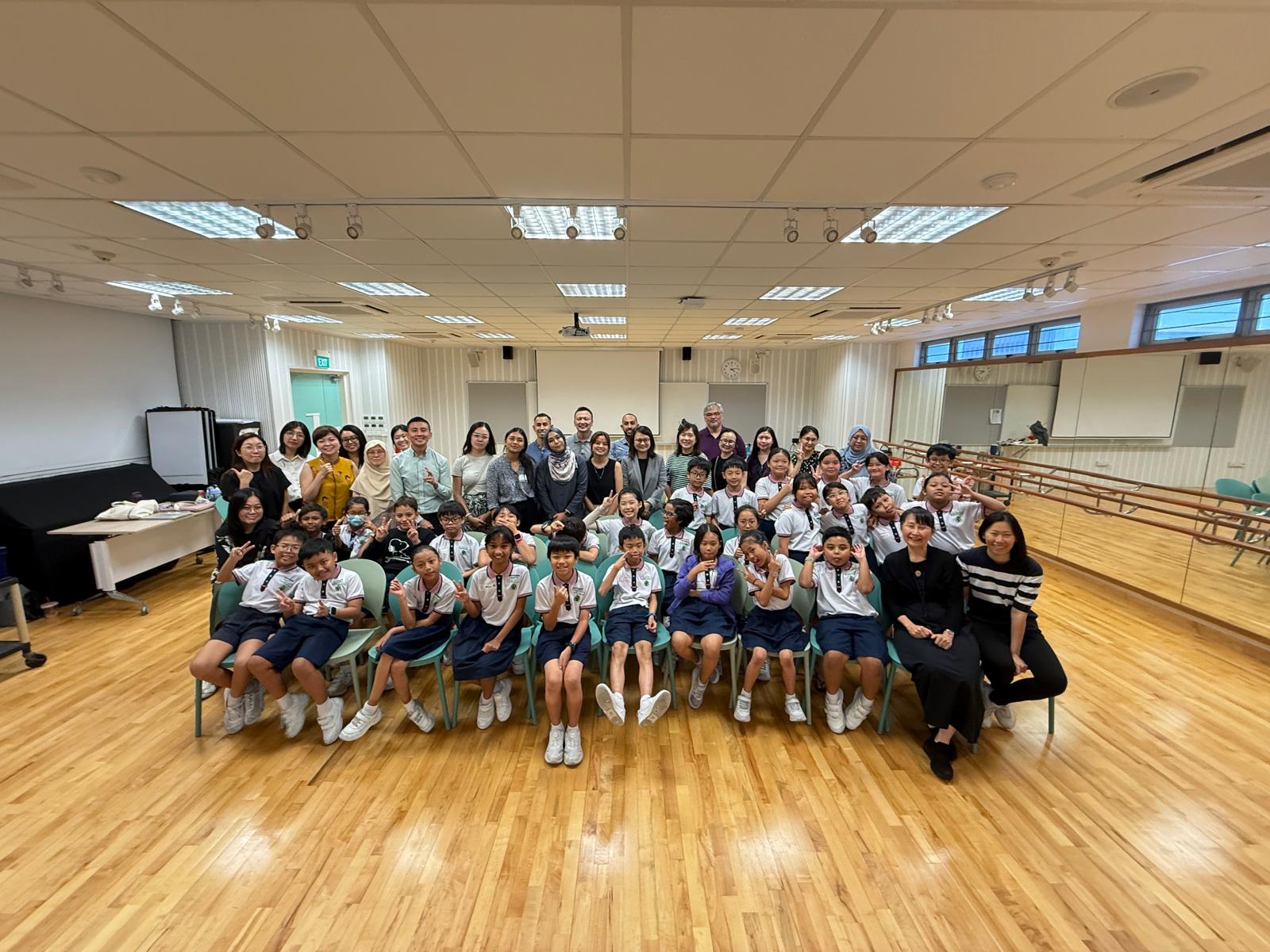
Selected Student Leaders are trained to co-facilitate LIGHT lessons alongside their teachers, guiding classmates through the Design Thinking process. This peer-led learning model builds confidence and deepens understanding — for both the leaders and those they teach.
Upper Primary LIGHT Programme – A Sustainability Challenge
As part of their post-PSLE experience, Primary 6 students become sustainability mentors. They interview their Primary 4 juniors, identify real barriers to eco-friendly habits, and design creative solutions — from digital games to video campaigns — to inspire change. This capstone experience develops leadership, empathy, communication, and civic responsibility in a deeply authentic way.
.jpeg)
.JPG)
.JPG)
.jpeg)